Bringing home a Ragdoll kitten is an exciting experience. Known for their beautiful blue eyes, soft semi-long coats and affectionate personalities, Ragdolls are a popular choice for families looking for a gentle and loving companion.
However, owning a Ragdoll cat is more than enjoying their beautiful appearance. These cats need proper nutrition, regular grooming, exercise, veterinary care and plenty of attention to stay healthy and happy.
If you are planning to bring a Ragdoll kitten home, this Ragdoll Cat Care Guide from Majestic Kittens will help you understand the basics of Ragdoll kitten care and make your new pet feel comfortable from day one.
What Makes Ragdoll Cats Special?
Ragdolls are large, affectionate, semi-longhaired cats with striking blue eyes. They are generally known for their calm and friendly temperament and can adapt well to households with children and other pets.
They are also slow-maturing compared with many other cat breeds. A Ragdoll may take several years to reach its full size and physical maturity. Adult males can commonly reach around 15–20 pounds, while females are generally smaller.
Despite their relaxed personality, Ragdolls still enjoy interactive play and mental stimulation. Toys, scratching posts, cat trees and regular play sessions can help keep them active.
Ragdoll Cat Care Essentials for New Owners
Before bringing your kitten home, prepare the basic supplies they will need. A comfortable environment can make the transition much easier.
Your Ragdoll kitten should have:
- A comfortable sleeping area
- Food and water bowls
- High-quality kitten food
- A litter box and suitable litter
- A scratching post
- Interactive toys
- A grooming comb or brush
- Nail clippers
- A secure carrier
- A safe area where they can relax
Creating a quiet space for your kitten during the first few days can also help them adjust to their new surroundings.
1. Feeding Your Ragdoll Cat
Nutrition is one of the most important parts of Ragdoll kitten care.
Ragdoll kittens need a balanced diet that supports their growth and development. Choose a nutritionally complete food appropriate for their age and follow feeding recommendations from your veterinarian or breeder.
As your Ragdoll grows, its nutritional needs will change. Avoid making sudden changes to its food because abrupt diet changes can cause digestive problems.
Feeding Tips for Ragdoll Cats
- Choose age-appropriate, complete cat food.
- Follow appropriate portion sizes.
- Provide fresh drinking water every day.
- Avoid excessive treats.
- Monitor your cat’s body condition and weight.
- Ask your veterinarian about the best feeding routine for your individual cat.
Ragdolls can have a strong appetite, so portion control is important. CFA notes that the breed may be prone to obesity, making weight management an important part of long-term care.
2. Grooming Your Ragdoll Cat
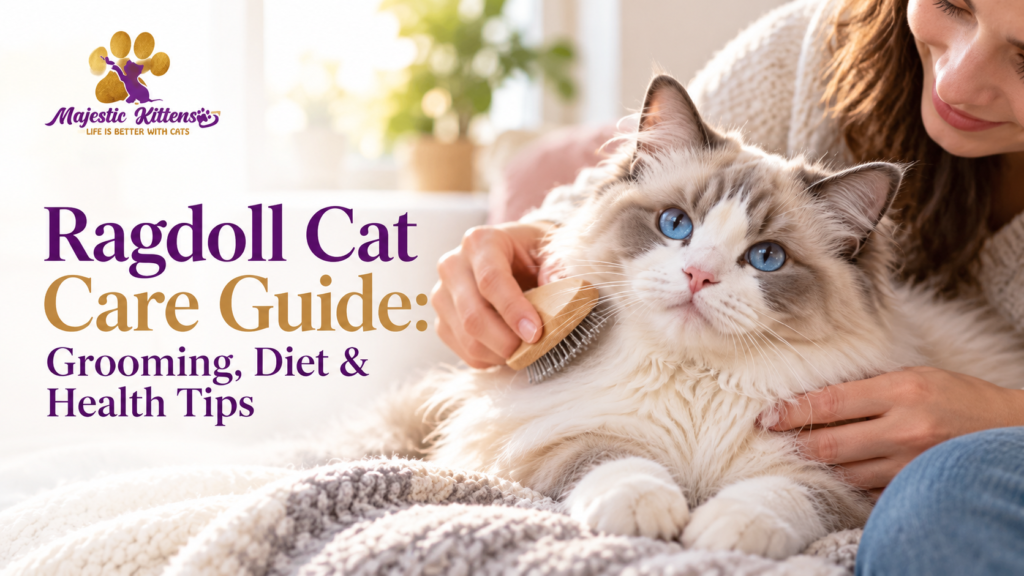
One of the most recognizable features of a Ragdoll is its soft, semi-long coat. Although the coat is relatively easy to maintain compared with some long-haired breeds, regular grooming is still necessary.
TICA recommends regular brushing or combing, with weekly grooming generally being a good starting point. During seasonal shedding periods, you may need to pay extra attention to areas where tangles can develop, such as around the armpits.
Ragdoll Cat Grooming Routine
A simple grooming routine can include:
Brushing:
Brush your Ragdoll at least once a week to remove loose hair and help prevent tangles.
Check for mats:
Pay particular attention to areas behind the legs, around the neck and under the front legs.
Nail trimming:
Trim your cat’s nails regularly or ask your veterinarian or professional groomer for assistance.
Dental care:
Regular dental care is also important for maintaining overall health.
Bathing:
Ragdolls generally do not need frequent baths. If a bath is necessary, use cat-safe products and ask your veterinarian or breeder for appropriate guidance.
Regular grooming is not only about keeping your Ragdoll looking beautiful. It also gives you an opportunity to check its skin, coat and overall condition.
3. Keep Your Ragdoll Active
Although Ragdolls are generally calm, they are not completely inactive cats.
Regular play is important for physical fitness, mental stimulation and maintaining a healthy weight.
Try providing:
- Feather or wand toys
- Interactive toys
- Balls
- Scratching posts
- Cat trees
- Puzzle feeders
- Safe climbing areas
TICA recommends interactive play for adult Ragdolls, particularly because maintaining a healthy weight is important for this large breed.
Even 10–15 minutes of interactive play several times a day can become a valuable part of your cat’s routine.
4. Give Your Ragdoll Plenty of Attention
Ragdolls are often described as affectionate and people-oriented cats. Many enjoy staying close to their family and may follow their owners around the home.
Your Ragdoll may enjoy:
- Sitting beside you
- Gentle cuddling
- Interactive play
- Being brushed
- Following you around the house
- Learning simple games
However, every cat has an individual personality. Some Ragdolls may be more independent than others, so allow your cat to decide when it wants attention.
Building trust gradually is especially important when your kitten has just arrived at your home.
5. Provide Fresh Water Every Day
Good hydration is an essential part of cat care.
Make sure your Ragdoll has access to clean, fresh water every day. Some cats prefer drinking from fountains, while others are comfortable with bowls.
TICA notes that Ragdolls may enjoy drinking fountains and recommends keeping water clean and accessible.
If you notice a significant change in your cat’s drinking habits, speak with your veterinarian.
6. Litter Box Care
A clean litter box can make a big difference to your cat’s comfort.
Place the litter box in a quiet and easily accessible location. Scoop it regularly and clean the box according to the type of litter you use.
For a new kitten:
- Show them where the litter box is.
- Keep it easy to access.
- Avoid placing it next to loud appliances.
- Keep the litter area clean.
- Observe any sudden changes in litter box habits.
A sudden change in urination or defecation habits should not be ignored and may require veterinary attention.
7. Ragdoll Cat Health Care
Regular veterinary care is an important part of responsible Ragdoll ownership.
Your veterinarian can help you establish an appropriate schedule for:
- Vaccinations
- Parasite prevention
- Health examinations
- Dental care
- Weight monitoring
- Preventive healthcare
- Spaying or neutering, when appropriate
Ragdolls are generally considered a healthy breed, but they can be affected by certain inherited conditions. One important condition associated with the breed is hypertrophic cardiomyopathy (HCM), a heart disease involving abnormal thickening of the heart muscle. TICA notes that a DNA test is available for the known Ragdoll HCM mutation, which is one reason health screening is important when choosing a kitten.
Always consult a qualified veterinarian rather than relying on online information to diagnose a health problem.
8. Watch Your Ragdoll’s Weight
Because Ragdolls are a large breed, it can sometimes be difficult for new owners to judge what a healthy body condition looks like.
Avoid overfeeding your cat simply because it seems hungry.
Instead:
- Follow appropriate feeding portions.
- Monitor weight regularly.
- Provide daily play.
- Limit unnecessary treats.
- Ask your veterinarian to assess body condition.
A healthy Ragdoll should have a strong, well-proportioned body rather than excessive body fat.
9. Create a Safe Indoor Environment
Ragdolls can be curious and playful, so your home should be prepared before your kitten arrives.
Keep potentially dangerous items away from your cat, including:
- Toxic household chemicals
- Unsafe plants
- Small objects that can be swallowed
- Loose electrical wires
- Open windows without secure screens
- Easily accessible medications
Provide safe places where your cat can sleep, hide, scratch and climb.
A cat-friendly home helps your Ragdoll feel secure while also encouraging healthy natural behaviors.
10. Socializing Your Ragdoll Kitten
Early positive experiences can help kittens become confident companions.
Allow your kitten to gradually experience:
- Different people
- Normal household sounds
- Gentle handling
- Grooming
- Carriers
- Veterinary visits
- Appropriate toys
Keep new experiences positive and avoid forcing interaction if your kitten appears frightened.
Ragdolls are generally known for their tolerant and friendly nature, but socialization still plays an important role in helping an individual kitten become comfortable in its environment.
Ragdoll Kitten Care: A Simple Daily Routine
A consistent routine can make life easier for both you and your kitten.
Morning
- Provide fresh food according to the feeding plan.
- Replace drinking water.
- Clean the litter box.
- Spend some time playing with your kitten.
Afternoon
- Allow your kitten to rest.
- Provide safe toys for independent play.
- Check water and litter if needed.
Evening
- Offer the next scheduled meal.
- Have an interactive play session.
- Give your kitten some affection and attention.
- Check the coat for tangles.
A routine helps your Ragdoll understand what to expect and gives you an easy way to notice changes in appetite, behavior or activity.
Common Ragdoll Cat Care Mistakes to Avoid
New owners sometimes make simple mistakes because they assume Ragdolls require very little maintenance.
Here are some things to avoid:
Overfeeding
Ragdolls are large cats, but being large does not mean they should be overweight.
Skipping Grooming
Their silky coat still needs regular brushing to prevent tangles and remove loose hair.
Ignoring Dental Care
Dental health is an important part of overall cat health.
Too Little Exercise
A calm personality does not mean your Ragdoll does not need playtime.
Changing Food Suddenly
Introduce dietary changes gradually and follow veterinary advice.
Ignoring Behavioral Changes
Changes in eating, drinking, litter box habits, energy or behavior can sometimes indicate a health issue.
How to Choose a Healthy Ragdoll Kitten
If you are planning to buy a Ragdoll kitten, choosing a responsible and trustworthy source is an important first step.
Ask questions about:
- The kitten’s health history
- Veterinary examinations
- Vaccination and deworming status
- Parent health screening
- HCM testing
- Feeding routine
- Socialization
- Registration or breed documentation, where applicable
- After-sales support
A responsible breeder or kitten provider should be willing to discuss the kitten’s health and care rather than focusing only on appearance.
At Majestic Kittens, Ragdoll cats are part of the range of breeds available to families across India. The website highlights health checks, vaccination support, grooming, a cage-free environment and support for new cat owners.
Why Choose Majestic Kittens?
At Majestic Kittens, our goal is to help families find a healthy and happy feline companion.
We focus on providing kittens with care, human interaction and a comfortable environment. Our services include health checks, breed documentation, vaccination support on request, grooming and assistance for new cat owners. We also offer kitten delivery across India.
If you are considering bringing a Ragdoll kitten into your family, our team can help you understand the breed and prepare for life with your new companion.
Frequently Asked Questions About Ragdoll Cat Care
Are Ragdoll cats easy to take care of?
Ragdolls are generally considered easy-going cats, but they still require regular grooming, proper nutrition, exercise, veterinary care and attention.
How often should I brush my Ragdoll cat?
Weekly brushing is a good general starting point. During periods of increased shedding, more frequent grooming may be helpful.
Do Ragdoll cats need a lot of exercise?
Ragdolls are generally calm, but they benefit from regular interactive play. Toys, scratching posts and climbing areas can help keep them physically and mentally stimulated.
What should I feed my Ragdoll kitten?
Feed a complete, balanced diet appropriate for your kitten’s age and follow feeding guidance from your veterinarian or breeder. Avoid excessive treats and monitor your kitten’s growth and body condition.
Are Ragdoll cats healthy?
Ragdolls are generally a healthy breed, but they can be susceptible to inherited conditions such as hypertrophic cardiomyopathy. Responsible health screening and regular veterinary care are important.
Do Ragdoll cats shed?
Yes. Ragdolls shed, with shedding often increasing during seasonal changes. Regular brushing helps manage loose hair and reduce tangles.
Are Ragdoll cats good for families?
Ragdolls are generally known for their affectionate and tolerant temperament and can do well with children and other pets when properly introduced and supervised.
Final Thoughts
Ragdolls are more than beautiful blue-eyed cats. They are affectionate, intelligent and generally easy-going companions that can become an important part of your family.
The key to successful Ragdoll cat care is consistency. Provide nutritious food, fresh water, regular grooming, daily play, veterinary care and plenty of love and attention.
If you are thinking about bringing a Ragdoll kitten home, take the time to understand the breed and prepare your home before your new companion arrives.
Looking for a Ragdoll kitten in India? Explore the Ragdoll cats available at Majestic Kittens and connect with our team to learn more about choosing and caring for your new furry companion.