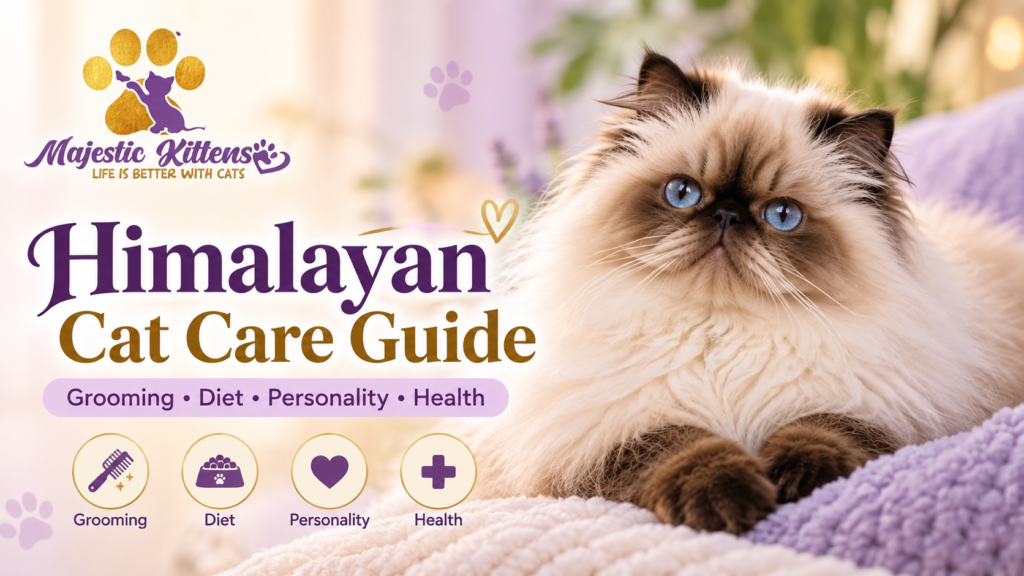
With their luxurious long coat, striking blue eyes and sweet personality, Himalayan cats are among the most beautiful companion cats for families and cat lovers. But behind that fluffy appearance is a cat that needs consistent grooming, a balanced diet, regular exercise and attentive health care.
If you are thinking about bringing home a Himalayan kitten or already have one, understanding its everyday needs can help you provide a healthier and happier life.
At Majestic Kitten, we believe that choosing a cat is only the beginning. Understanding the breed and providing the right care is what helps build a strong bond between you and your furry companion.
This Himalayan Cat Care Guide covers everything you need to know, including grooming, diet, personality, exercise, health concerns and everyday care.
Quick Himalayan Cat Facts
| Feature | Details |
| Breed type | Long-haired colour-point cat |
| Appearance | Fluffy coat, blue eyes and colour points |
| Size | Medium to large |
| Typical weight | Around 3–6.5 kg, depending on sex and individual |
| Personality | Calm, affectionate and playful |
| Coat | Long and dense |
| Grooming | Daily grooming recommended |
| Lifestyle | Primarily indoor |
| Shedding | High |
| Activity level | Moderate |
| Diet | Complete and balanced cat food |
| Common care needs | Coat, eye, dental and weight management |
Himalayan Cat Personality and Temperament
One of the biggest reasons people love Himalayan cats is their gentle personality.
They are generally affectionate, people-oriented and comfortable spending time with their family. Many enjoy sitting beside their owners, relaxing on a comfortable bed or receiving gentle attention.
Although Himalayan cats can be calm and relaxed, they are not completely inactive. They can enjoy interactive toys, short play sessions and activities that encourage movement.
Are Himalayan Cats Good Family Pets?
Yes, Himalayan cats can make wonderful family companions when they are handled gently and socialised properly.
They may do well with:
- Families
- Couples
- Older children
- Other cats
- Cat-friendly dogs
- Apartment living
However, every cat has an individual personality. Children should be taught to handle cats calmly and respectfully rather than pulling their fur, tail or ears.
Himalayans generally prefer a peaceful environment rather than constant noise and rough handling.
Himalayan Cat Grooming Guide
Grooming is one of the most important parts of Himalayan cat care.
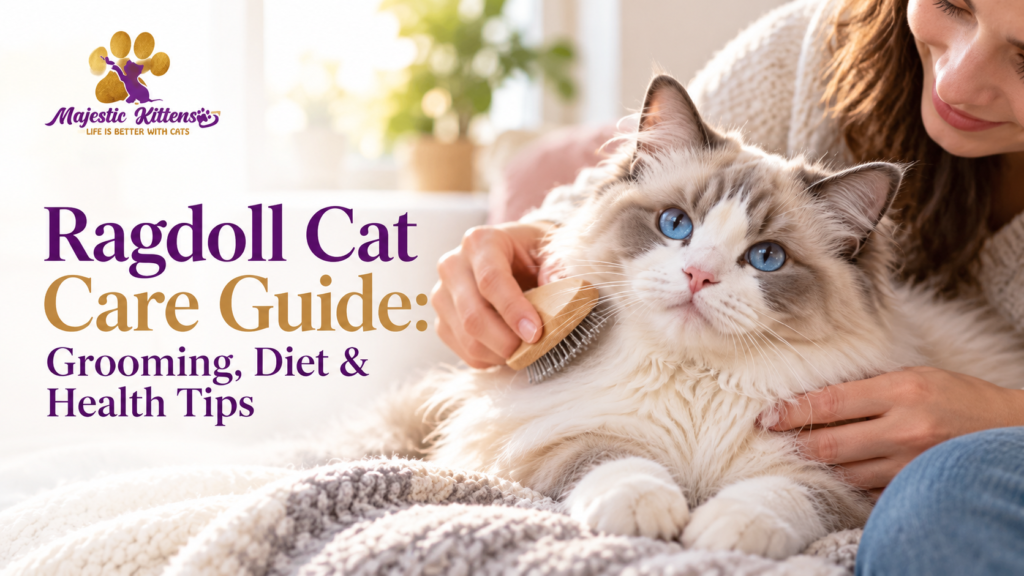
Their long, dense coat can easily develop knots and mats if it is not brushed regularly. Daily brushing helps remove loose hair and prevents tangles from becoming painful mats.
How Often Should You Groom a Himalayan Cat?
For most Himalayan cats, daily brushing is the safest routine.
A basic grooming routine can include:
- Gently brush the entire coat.
- Pay special attention to areas behind the ears, under the legs and around the belly.
- Use a suitable comb to reach through the dense coat.
- Check for mats, dirt or skin irritation.
- Gently clean the facial area when needed.
- Trim nails regularly.
- Arrange professional grooming when necessary.
Never aggressively pull at a mat. Severe matting can be uncomfortable or painful and may require professional help.
Himalayan Cat Eye Care
Himalayan cats have large blue eyes and facial features that can contribute to tear staining. Daily face cleaning may help keep the area clean. VCA also recommends wiping the face daily with a damp washcloth to help manage tear staining.
Use a clean, soft cloth and avoid getting products directly into the eyes.
If you notice persistent redness, swelling, unusual discharge, squinting or discomfort, consult a veterinarian.
Himalayan Cat Diet: What Should They Eat?
A nutritious diet is essential for maintaining your Himalayan cat’s coat, muscles, digestion and overall health.
Choose a complete and balanced cat food appropriate for your cat’s age and health requirements. PetMD recommends selecting food that meets recognised nutritional standards and discussing individual dietary needs with your veterinarian.
What Can You Feed a Himalayan Cat?
Depending on your veterinarian’s recommendations, a Himalayan cat’s diet may include:
- Complete commercial wet food
- Complete commercial dry food
- Appropriate kitten food for growing kittens
- Fresh, clean drinking water
- Vet-approved treats in moderation
The exact amount of food depends on factors such as age, body condition, activity level and health.
Avoid Overfeeding Your Himalayan Cat
Because of their sturdy body and fluffy coat, Himalayan cats can appear heavier than they actually are. They can also be prone to weight gain.
Instead of allowing unlimited food throughout the day, measured portions and multiple small meals can be helpful. Food puzzles can also provide mental stimulation while slowing down eating.
Always speak to your veterinarian before making major dietary changes.
Himalayan Cat Health Problems
Himalayan cats can be loving and healthy companions, but their body structure and genetic background mean owners should be aware of certain health concerns.
Potential concerns include:
1. Breathing Problems
Himalayans have a shortened facial structure, which can be associated with breathing difficulties. Flat-faced cats may be more vulnerable to respiratory problems, particularly in hot or poorly ventilated environments.
This is especially important in warm climates such as India.
Keep your Himalayan in a cool, well-ventilated indoor environment and avoid strenuous activity during very hot weather.
If your cat develops unusual breathing difficulty, open-mouth breathing or significant respiratory distress, seek veterinary care promptly.
2. Eye Problems and Tear Staining
Their facial structure can contribute to increased tearing and staining around the eyes.
Regular gentle cleaning can help maintain hygiene, but persistent discharge or eye irritation should be evaluated by a veterinarian.
3. Dental Problems
The shortened jaw structure can contribute to crowded teeth and dental problems.
Regular dental checks are therefore an important part of Himalayan cat health care.
4. Polycystic Kidney Disease
Polycystic kidney disease (PKD) is a hereditary condition associated with Persian-type cats and has historically been a concern in Himalayan lines.
If you are getting a Himalayan kitten from a breeder, ask about appropriate health screening and the health history of the parents.
5. Weight Gain
A calm lifestyle combined with excessive feeding can lead to obesity.
Regular play, measured meals and monitoring body condition can help your Himalayan maintain a healthy weight.
Himalayan Cat Health Care Checklist
Regular preventive care can make a big difference.
Your Himalayan cat should have:
- Routine veterinary examinations
- Recommended vaccinations
- Parasite prevention
- Dental checks
- Weight monitoring
- Eye and facial checks
- Coat and skin checks
- Appropriate nutrition
- Regular grooming
If you notice changes in appetite, weight, breathing, behaviour, urination, coat condition or energy levels, contact your veterinarian.
How to Care for a Himalayan Kitten
Himalayan kittens require slightly different attention because they are still growing and developing.
Himalayan Kitten Care Tips
Feed age-appropriate food:
Growing kittens need nutrition formulated for their developmental stage.
Introduce grooming early:
Short, gentle brushing sessions can help your kitten become comfortable with grooming.
Create a safe environment:
Keep small objects, toxic plants, wires and other hazards away from your kitten.
Provide regular play:
Kittens naturally have more energy and benefit from interactive play.
Socialise gently:
Introduce people, handling and household experiences gradually and positively.
Schedule veterinary care:
Follow your veterinarian’s vaccination, parasite prevention and health-check recommendations.
Starting good habits early can make grooming and handling much easier as your Himalayan grows.
Is a Himalayan Cat Suitable for Indian Homes?
Himalayan cats can live comfortably in Indian homes, particularly when they are kept indoors and their heat sensitivity is taken seriously.
Their long coat and flat facial structure mean that summer care is especially important.
During hot weather:
- Keep fresh water available.
- Provide cool resting areas.
- Avoid excessive outdoor exposure.
- Keep the home well ventilated.
- Use air conditioning when appropriate.
- Avoid intense exercise during peak heat.
- Monitor your cat for signs of overheating or breathing difficulty.
Never leave a cat in a parked car or another hot, poorly ventilated space.
Himalayan Cat Daily Care Routine
A simple routine can help you stay consistent.
| Care Activity | Suggested Routine |
| Brushing | Daily |
| Eye/face cleaning | Daily or as needed |
| Fresh water | Daily |
| Feeding | Measured meals based on individual needs |
| Playtime | Daily |
| Litter box cleaning | Daily |
| Nail check | Regularly |
| Dental care | Regularly |
| Professional grooming | As needed |
| Veterinary check-up | As recommended by your vet |
The exact routine may vary depending on your cat’s age, coat, health and lifestyle.
Frequently Asked Questions About Himalayan Cats
Are Himalayan cats high maintenance?
Yes. Their long coat requires regular, often daily, grooming. Eye and facial care, weight management and routine veterinary care are also important.
Are Himalayan cats good for first-time cat owners?
They can be, provided the owner understands their grooming and health-care requirements. New owners should be prepared for daily coat maintenance and regular veterinary care.
What do Himalayan cats eat?
They should receive a complete and balanced diet appropriate for their age, lifestyle and health. A veterinarian can help determine the right food and portion size for your individual cat.
Do Himalayan cats need daily grooming?
Yes. Daily brushing is recommended to reduce tangles and mats in their long, dense coat.
Are Himalayan cats indoor cats?
Yes. Himalayan cats are generally best suited to indoor living, where owners can control their environment and protect them from hazards and extreme heat.
Are Himalayan cats good with children?
They can be affectionate family cats, but children should always be taught to handle them gently and respectfully.
Do Himalayan cats have health problems?
Like many breeds, Himalayans can have breed-associated health concerns, including respiratory, eye, dental and hereditary conditions. Regular veterinary care is important.
How long do Himalayan cats live?
Lifespan varies between individual cats. With responsible breeding, good nutrition, preventive healthcare and appropriate home care, Himalayan cats can enjoy many years as family companions.