
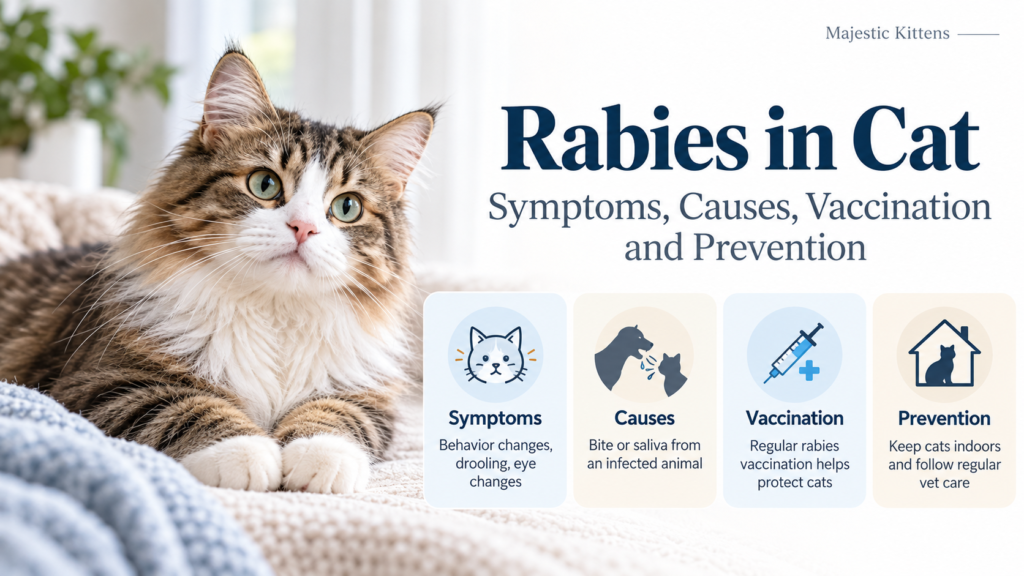
Rabies is one of the most serious viral diseases that can affect cats. Although rabies in cat cases can be prevented through vaccination and responsible pet care, the disease becomes extremely dangerous once clinical symptoms appear. It affects the nervous system and can also spread from infected animals to humans.
Many cat owners have questions such as can cats get rabies, can cat scratch cause rabies, what are the rabies symptoms in cats, and how much a rabies vaccine for cats may cost.
Understanding the early warning signs, possible sources of infection, and the importance of vaccination can help protect both your cat and your family.
Important: If your cat has been bitten or scratched by a potentially rabid animal, or is showing unusual neurological or behavioural symptoms after an animal encounter, contact a veterinarian immediately. Rabies is a medical emergency.
What Is Rabies in Cats?
Rabies is a viral disease that affects mammals, including cats, dogs, wildlife, and humans. The virus primarily attacks the brain and nervous system. It is usually transmitted through the saliva of an infected animal, most commonly through a bite.
Once the virus enters the body, it can travel through nerve tissues toward the brain and spinal cord. It may eventually reach the salivary glands, allowing an infected animal to spread the virus through its saliva.
Unfortunately, once clinical signs of rabies develop, the disease is nearly always fatal. This is why rabies vaccination for cats and immediate veterinary attention following a possible exposure are so important.
Can Cats Get Rabies?
Yes. Can cats get rabies? Absolutely. Cats are mammals and can become infected with the rabies virus after exposure to an infected animal.
Cats that spend time outdoors may have more opportunities to encounter potentially infected animals. Stray or free-roaming animals and wildlife can pose a risk depending on the rabies situation in the local area.
However, simply being outdoors does not mean a cat has rabies. Exposure to an infected animal is the important concern.
Keeping cats indoors, avoiding contact with unfamiliar animals, and maintaining recommended vaccinations can reduce the risk.
How Do Cats Get Rabies?
Rabies is primarily transmitted when saliva from an infected animal enters the body, usually through a bite wound. The virus can then travel through the nervous system toward the brain.
Possible situations include:
- A cat being bitten by a rabid dog
- A fight with an infected stray or free-roaming animal
- Contact with infected wildlife
- A bite from another infected mammal
- Saliva from an infected animal entering an open wound
The risk depends on the animal involved, the type of contact, vaccination status, and local rabies prevalence.
Rabies Symptoms in Cats
The rabies symptoms in cats can vary as the disease progresses. Early signs may be subtle and can resemble other illnesses or behavioural problems.
Common symptoms may include:
- Sudden changes in behaviour
- Nervousness or unusual fear
- Irritability
- Sudden aggression
- Unusual excitement or restlessness
- Reduced appetite
- Abnormal vocalisation
- Lack of coordination
- Difficulty walking
- Excessive drooling
- Difficulty swallowing
- Dilated pupils
- Muscle weakness
- Seizures
- Progressive paralysis
- Sudden death
PetMD notes that cats can initially show mild changes before developing rapidly worsening neurological signs.
Early Behavioural Changes
One of the earliest warning signs can be a noticeable change in temperament.
A normally friendly cat may suddenly become withdrawn, nervous, irritable, or unusually reactive. Conversely, a quiet cat may become unusually active or aggressive.
These signs alone do not mean that a cat has rabies. Many other medical conditions can cause behavioural changes. However, unusual behaviour after a potential animal exposure should be taken seriously.
Neurological Symptoms
As rabies progresses, neurological problems can become more noticeable. Affected cats may have difficulty coordinating their movements, walking normally, swallowing, or controlling their muscles.
Weakness, seizures and progressive paralysis can occur in advanced disease.
Signs of Rabies in Cats’ Eyes
One frequently searched question is about signs of rabies in cats eyes.
Dilated or widely enlarged pupils can occur in cats with rabies. VCA specifically identifies widely dilated pupils as a notable feature of rabies in cats.
However, dilated pupils do not automatically mean a cat has rabies. Eye problems, neurological disorders, medications, stress, and other medical conditions can also affect pupil size.
Therefore, owners should not attempt to diagnose rabies by looking at the cat’s eyes alone. If dilated pupils occur together with sudden behavioural changes, aggression, difficulty walking, excessive drooling, swallowing problems, or a history of possible exposure, veterinary assessment is important.
Can Cat Scratch Cause Rabies?
A common question is: can cat scratch cause rabies?
A scratch itself does not automatically transmit rabies. The concern arises when a potentially rabid animal’s saliva contaminates the wound. Rabies is primarily transmitted through saliva, especially through bites.
However, scratches from an unfamiliar, stray, or potentially infected cat should not be ignored—particularly if the animal is behaving abnormally or its vaccination history is unknown.
If a person is scratched or bitten by a cat:
- Immediately wash the wound thoroughly with soap and running water.
- Avoid touching the wound unnecessarily.
- Seek medical advice promptly if rabies exposure is possible.
- Tell the healthcare professional what type of animal was involved.
- If possible, provide information about the cat’s vaccination status and behaviour.
- Follow local public-health advice regarding rabies post-exposure treatment.
The CDC recommends medical evaluation when a person is bitten or scratched by a cat whose rabies vaccination status is unknown, particularly when the cat appears sick or is a stray.
Rabies Vaccine for Cats: Why Is It Important?
The rabies vaccine for cats is one of the most important preventive measures available to cat owners.
Vaccination helps reduce the risk of rabies and is particularly important for cats that may come into contact with other animals. Vaccination schedules can vary according to the cat’s age, vaccine used, local regulations, health status, and veterinarian recommendations.
A veterinarian can determine:
- When your kitten should receive its first rabies vaccination
- When booster doses are required
- Which vaccine is appropriate
- Whether an overdue vaccination needs a particular schedule
- What to do following possible rabies exposure
Rabies vaccines for animals should be administered under veterinary supervision and according to applicable local requirements.
Do Indoor Cats Need Rabies Vaccination?
Indoor cats may have a lower exposure risk, but indoor living does not completely eliminate the possibility of exposure.
A cat could potentially escape outdoors, encounter another animal, or come into contact with an infected animal that enters its environment. Vaccination therefore remains an important part of preventive veterinary care.
Your veterinarian can recommend an appropriate vaccination schedule based on your cat’s individual circumstances.
Cat Rabies Injection Price
The cat rabies injection price can vary depending on the city, veterinary clinic, vaccine brand, consultation fee, and whether the vaccination is provided through a private clinic, animal welfare organisation, or vaccination programme.
As a general 2026 India reference, published veterinary pricing information places an anti-rabies vaccine for cats at approximately ₹300–₹700 per dose, with consultation charges potentially additional. Prices vary between clinics and locations.
In Pune, some animal-welfare services may provide anti-rabies vaccination at no charge or at subsidised rates for eligible cats. For example, Blue Cross Society of Pune currently states that it provides free anti-rabies vaccination for cats, including pet cats, subject to its programme and availability.
Therefore, instead of relying on a single advertised price, it is better to confirm the current vaccination fee with the veterinary clinic before visiting.
How Long Does Rabies Take to Show in Cats?
The incubation period can vary considerably. VCA reports that clinical signs in cats may appear around 2–24 weeks or longer after exposure, depending on factors such as the location and severity of the bite and the amount of virus introduced.
This is one reason why a cat may appear healthy immediately after an animal fight but still require professional assessment if a possible rabies exposure has occurred.
Do not wait for symptoms before contacting a veterinarian after a known or suspected exposure.
How Is Rabies Diagnosed in Cats?
Rabies cannot be reliably confirmed in a living cat through a simple routine blood test or physical examination.
Veterinarians consider the cat’s clinical signs, vaccination history, possible exposure, and local circumstances when assessing risk. Definitive testing involves examination of brain tissue after death.
If a cat has potentially exposed a person through a bite or scratch, public-health and veterinary authorities may need to become involved.
What Should You Do If Your Cat May Have Been Exposed to Rabies?
If your cat has been bitten by a suspected rabid animal, do not try to handle or restrain the animal unnecessarily.
Instead:
- Contact a veterinarian immediately.
- Explain exactly what happened.
- Tell the veterinarian whether your cat is vaccinated.
- Provide information about the animal involved, if known.
- Avoid direct contact with saliva.
- Keep people and other pets away from the potentially exposed animal until professional advice is obtained.
- Follow veterinary and public-health instructions regarding observation, vaccination, quarantine, or testing.
The appropriate management depends on vaccination status, exposure circumstances, local regulations, and veterinary/public-health assessment.
How Can You Prevent Rabies in Cats?
Prevention is much safer than waiting for symptoms.
1. Keep Vaccinations Up to Date
Follow the rabies vaccination schedule recommended by your veterinarian.
2. Limit Contact With Unknown Animals
Do not allow your cat to fight or interact with stray or unfamiliar animals.
3. Consider Indoor Living
Keeping cats indoors can reduce opportunities for contact with potentially infected animals.
4. Supervise Outdoor Time
If your cat goes outdoors, supervised access or secure enclosures can reduce contact with wildlife and roaming animals.
5. Take Bites and Scratches Seriously
If your cat is involved in an animal fight, contact your veterinarian even if the wound appears small.
6. Keep Vaccination Records
Maintain your cat’s vaccination records so that the veterinarian can quickly determine its vaccination status following an exposure.
Frequently Asked Questions About Rabies in Cats
Can cats get rabies?
Yes. Cats can contract rabies after exposure to an infected mammal, most commonly through a bite. Vaccination can significantly reduce the risk.
What are the main rabies symptoms in cats?
Common symptoms include sudden behavioural changes, nervousness, aggression, lack of coordination, excessive drooling, difficulty swallowing, dilated pupils, seizures, weakness, paralysis, and rapid deterioration.
Can cat scratch cause rabies?
A cat scratch does not automatically cause rabies. The concern is greatest when saliva from a potentially infected animal contaminates the wound. Because rabies can be fatal once symptoms develop, potential exposures should be assessed promptly by a healthcare professional.
What are the signs of rabies in cats’ eyes?
Widely dilated pupils can occur in cats with rabies. However, dilated pupils can have many other causes, so they cannot be used alone to diagnose rabies.
Is there a rabies vaccine for cats?
Yes. Rabies vaccines are available for cats and are an important part of preventive veterinary care. Your veterinarian can recommend the appropriate vaccination schedule based on your cat’s age, health, exposure risk, vaccine and local requirements.
What is the cat rabies injection price in India?
A commonly reported 2026 range is around ₹300–₹700 for the anti-rabies vaccine dose, although consultation and other charges may apply. Actual prices vary by clinic and location.
Can rabies in cats be treated?
Once clinical rabies develops, there is no established curative treatment and the disease is considered fatal. The focus is therefore on prevention, vaccination, and immediate professional management after potential exposure.