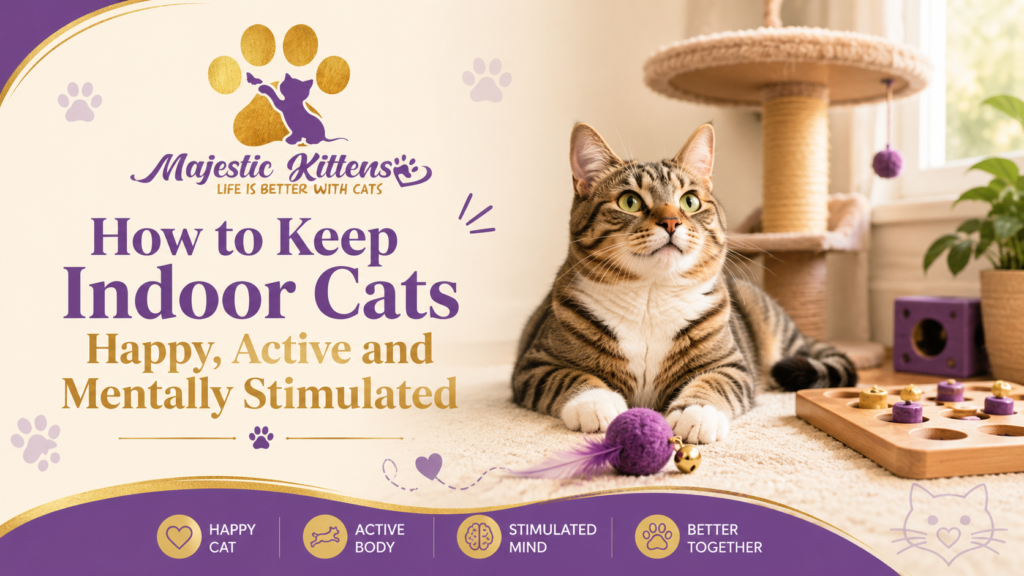
Indoor life can be safe, comfortable and enriching for cats—but simply providing food, water and a cosy bed isn’t always enough.
Cats naturally enjoy activities such as stalking, chasing, climbing, scratching, exploring and observing their surroundings. When an indoor environment doesn’t provide opportunities for these behaviours, some cats may become bored or less active.
The good news is that you don’t need a huge house or an expensive collection of toys to create an engaging environment. With thoughtful cat enrichment, interactive play and a few changes around your home, you can help your indoor cat stay physically active and mentally engaged.
Here are practical ways to make indoor life more interesting for your feline companion.
1. Make Daily Playtime a Routine
One of the easiest ways to keep an indoor cat active is through interactive play.
Rather than simply leaving toys on the floor, spend dedicated time playing with your cat. Wand toys, feather toys and other interactive toys can encourage cats to stalk, chase, pounce and kick—behaviours that mimic parts of their natural hunting sequence.
Try short play sessions throughout the day rather than relying on one long session.
Try these activities:
- Chase a wand toy around the room.
- Move a toy slowly behind furniture.
- Let your cat stalk a toy before allowing them to catch it.
- Rotate different toys to prevent boredom.
- Use toys appropriate for your cat’s age and activity level.
Safety tip: Toys with strings or small detachable parts should be used under supervision and stored safely afterward.
2. Create Vertical Space
Cats don’t experience a room only from floor level.
Adding vertical territory can give your cat more opportunities to climb, observe and rest. A cat tree, climbing tower or securely installed shelf can turn unused vertical space into an engaging part of the home.
Place a cat tree near a safe window if your cat enjoys watching birds, people or outdoor activity.
Vertical spaces can be particularly useful in homes with multiple cats because they provide additional areas for climbing, resting and observing.
3. Give Your Cat a Window View
A secure window can become one of your cat’s favourite entertainment spots.
Place a comfortable perch near a securely screened window so your cat can watch the world outside.
Your cat may enjoy watching:
- Birds
- Squirrels
- People
- Moving leaves
- Cars and outdoor activity
You can make the experience more interesting by occasionally changing the enrichment around the area.
Always make sure windows are securely screened before allowing your cat access.
4. Use Puzzle Feeders and Food Enrichment
Cats naturally spend time searching for and working toward food.
Instead of providing every meal in exactly the same way, consider introducing food puzzles or enrichment feeders that encourage your cat to think and interact with their food.
Start with an easy puzzle and gradually introduce more challenging options if your cat enjoys them.
This can turn mealtime into an opportunity for both mental stimulation and activity.
Remember to account for treats and enrichment food within your cat’s overall diet.
5. Rotate Your Cat’s Toys
You don’t need dozens of toys available at the same time.
In fact, keeping every toy on the floor constantly may make them less interesting.
Instead, keep some toys stored away and rotate them regularly.
For example:
Week 1: Wand + ball + kicker toy
Week 2: Interactive toy + tunnel + soft toy
Week 3: Puzzle feeder + wand + cardboard box
When an old toy returns after a break, it may feel more interesting to your cat again.
6. Add Scratching Opportunities
Scratching is a normal feline behaviour. It provides an outlet for natural behaviour and can also help cats stretch and maintain their claws.
Instead of trying to stop scratching altogether, give your cat appropriate scratching surfaces.
You can offer:
- Vertical scratching posts
- Horizontal scratchers
- Cardboard scratchers
- Scratching areas near favourite resting spots
If your cat already scratches furniture, place an appropriate scratcher nearby and encourage its use.
7. Give Your Cat Safe Places to Hide
Cats need opportunities to retreat and relax.
A cardboard box, covered bed, cat tunnel or quiet corner can provide a comfortable hiding place.
Don’t force your cat out of their hiding spot when they are resting. A safe retreat can help make the home environment feel more comfortable.
For multi-cat households, providing multiple resting and hiding areas can help each cat find a space of their own.
8. Bring Safe Outdoor Experiences Indoors
You can introduce elements of the outdoors without allowing your cat to roam freely.
For example, consider:
- Cat-safe grass
- A window perch
- Natural textures
- Secure outdoor enclosures
- New safe objects to investigate
A catio or secure outdoor enclosure can provide controlled access to fresh air and outdoor sights while reducing some of the risks associated with free roaming.
If you use plants indoors, make sure they are safe for cats.
9. Make Mealtime More Interesting
Food doesn’t always have to mean simply placing a bowl down.
Depending on your cat’s diet and feeding routine, you can use appropriate enrichment methods such as:
- Puzzle feeders
- Treat-dispensing toys
- Small portions hidden in safe locations
- Interactive feeding activities
The goal isn’t to make every meal complicated. It’s simply to introduce variety and encourage natural problem-solving behaviours.
10. Create a Cat-Friendly Routine
Cats often benefit from predictable routines.
Try establishing regular times for:
Play → Food → Rest
For example, you might have an interactive play session before a meal, followed by a quiet resting period.
Consistency can make daily activities more predictable while giving your cat regular opportunities for activity and engagement.
11. Give Your Cat One-on-One Attention
Enrichment isn’t only about toys.
Your cat may also enjoy:
- Gentle grooming
- Petting
- Training
- Talking to them
- Sitting together
- Exploring a new safe area
Pay attention to your cat’s body language. Some cats enjoy lots of interaction, while others prefer shorter periods of attention.
The best enrichment is individualised to your cat’s personality and preferences.
12. Introduce Simple Training Games
Cats can learn more than many people realise.
You can introduce simple reward-based behaviours such as:
- Responding to their name
- Touching your hand with their nose
- Going to a specific mat
- Entering a carrier
- Simple tricks
Keep training sessions short and positive.
Never punish your cat for not responding. The goal is to make learning enjoyable.
Signs Your Indoor Cat May Need More Enrichment
Every cat has a different activity level, so boredom shouldn’t be diagnosed from one behaviour alone.
However, changes such as:
- Increased destructive behaviour
- Excessive attention-seeking
- Unusual nighttime activity
- Reduced interest in normal activities
- Increased scratching
- Changes in eating or grooming habits
may be worth paying attention to.
If you notice a sudden or persistent change in your cat’s behaviour, appetite, grooming or activity, speak with a veterinarian. Behavioural changes can sometimes have an underlying medical cause.
How Much Play Does an Indoor Cat Need?
There isn’t one exact playtime requirement that works for every cat.
Age, health, personality, breed, weight and individual activity levels all matter.
Rather than focusing only on a specific number of minutes, aim for regular opportunities for movement and mental stimulation throughout the day.
A young, energetic cat may want much more interactive play than an older or less active cat.
The key is consistency.
A Simple Indoor Cat Enrichment Schedule
You can start with a simple routine like this:
| Time | Activity |
|---|---|
| Morning | Interactive play |
| Breakfast | Puzzle feeder or regular meal |
| Afternoon | Window watching / rest |
| Evening | Wand or chase game |
| Night | Quiet interaction + comfortable resting space |
You don’t need to follow this exact schedule. Adjust it according to your cat’s personality and daily routine.
Create a Happier Indoor Life for Your Cat
Keeping an indoor cat happy isn’t about filling your home with expensive gadgets.
It’s about creating an environment where your cat can play, climb, scratch, explore, observe, rest and interact with you.
A few simple changes—such as adding vertical space, rotating toys, introducing puzzle feeders and scheduling daily interactive play—can make an ordinary home much more engaging.
At Majestic Kitten, we believe that understanding a cat’s natural behaviours is an important part of responsible cat care. Whether you’re welcoming a kitten into your home or caring for an adult cat, thoughtful enrichment can help create a safer, happier and more stimulating environment.
Give your indoor cat something new to explore every day. 🐾
FAQs
How do I keep my indoor cat happy?
Provide regular interactive play, climbing opportunities, scratching posts, comfortable resting spaces, window access with secure screens, and mentally stimulating activities such as puzzle feeders.
How do I keep my indoor cat entertained while I’m away?
Leave safe enrichment options such as appropriate solo toys, cardboard boxes, tunnels and puzzle feeders. Rotate toys so your cat has some variety. Avoid leaving potentially hazardous toys unattended.
How can I mentally stimulate my indoor cat?
Puzzle feeders, interactive play, training games, toy rotation, window observation and safe exploration can provide mental stimulation.
How do I exercise an indoor cat?
Interactive chase and stalking games, climbing structures and play sessions can encourage movement. Choose activities appropriate for your cat’s age and physical condition.
Do indoor cats get bored?
They can. Indoor cats depend on their environment and caregivers for opportunities to exercise, explore and engage in natural behaviours. Providing regular enrichment can make indoor life more stimulating. Humane World similarly recommends play, toys, vertical spaces and window perches as ways to make indoor environments more engaging.
Is it okay for cats to stay indoors?
Indoor living can provide a safe environment, but cats still need opportunities for exercise, exploration, play and natural behaviours. A well-enriched indoor environment can help meet those needs. Humane World notes that going outdoors is not a requirement for feline happiness when cats receive appropriate enrichment indoors.