What Is the Cost of Owning a Cat in India?
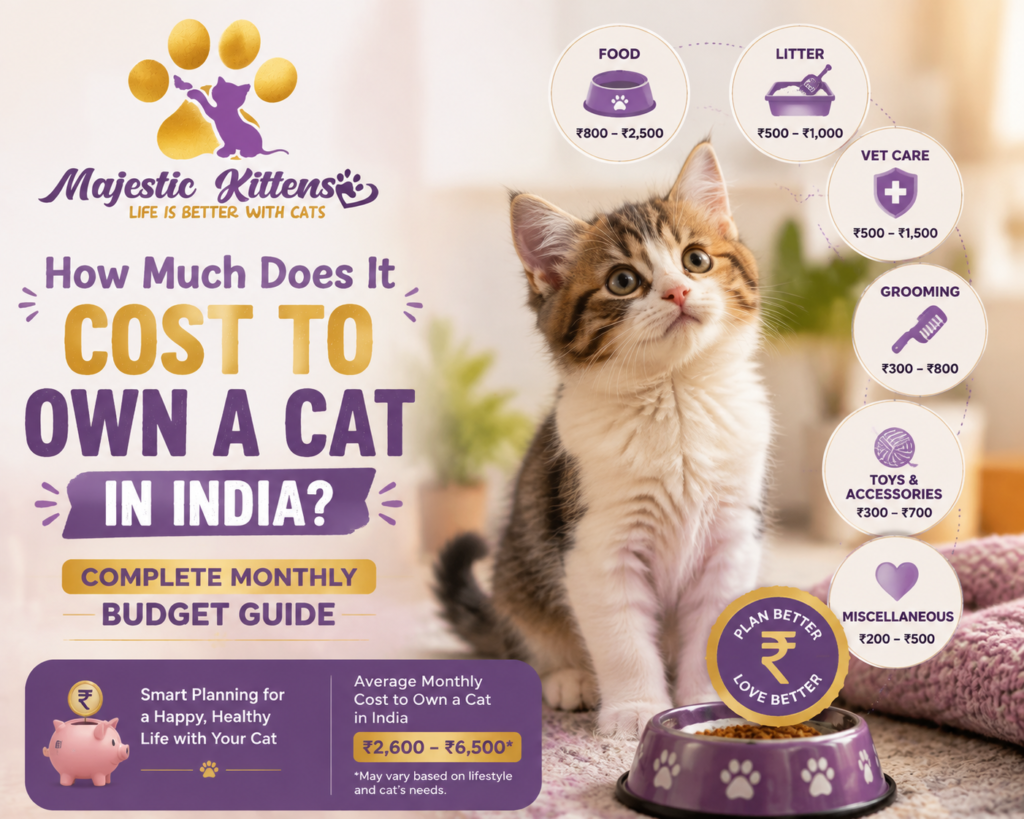
The cost of owning a cat in India includes both one-time kitten expenses and recurring monthly expenses such as food, litter, grooming, veterinary care, preventive healthcare, and accessories. For a healthy indoor cat, the regular budget is generally manageable, but unexpected veterinary treatment can increase the overall cost considerably.
The total cost of owning a cat in India depends on factors such as the cat’s age, breed, dietary requirements, health, grooming needs, quality of food, and your location.
In addition to the kitten cost, new cat parents should budget for essential supplies and preventive healthcare before bringing a cat home.
Average Cat Monthly Expenses in India
Your cat’s monthly expenses can vary depending on the products and services you choose. A practical budget should account for recurring necessities as well as occasional healthcare costs.
| Expense | Typical Frequency | What It Covers |
| Cat food | Monthly | Dry food, wet food, treats |
| Cat litter | Monthly | Litter and waste disposal |
| Grooming | Monthly/Occasional | Brushing, nail trimming, professional grooming |
| Veterinary care | Occasional | Check-ups, illness, treatment |
| Vaccinations | Periodic | Core vaccinations and boosters |
| Parasite prevention | Periodic | Deworming and flea/tick prevention |
| Toys | Occasional | Interactive and enrichment toys |
| Accessories | One-time/Occasional | Bed, bowls, carrier, scratching post |
| Emergency fund | As needed | Unexpected medical expenses |
Important: These expenses should be treated as a budgeting framework rather than a fixed price list. Actual costs vary by city, clinic, cat breed, food brand, lifestyle, and healthcare needs.
1. Kitten Cost in India
The kitten cost in India can vary widely depending on factors such as breed, pedigree, age, breeder reputation, location, health screening, vaccinations, and registration.
Popular or pedigree cat breeds may have a higher initial purchase price than domestic cats. However, price should not be the only consideration when choosing a kitten.
Before bringing a kitten home, consider:
- Health and vaccination status
- Age of the kitten
- Deworming history
- Veterinary records
- Breed characteristics
- Temperament
- Feeding requirements
- Grooming requirements
- Source and breeding practices
A responsible kitten source should provide appropriate information about the kitten’s health and care requirements.
If you are looking for a kitten, Majestic Kittens can be included as a commercial resource for readers researching cats and kittens in India.
Suggested internal link: Link the words “kittens available at Majestic Kittens” to the relevant kitten/breed page on the Majestic Kittens website.
2. Cat Food Cost in India
Cat food cost is one of the most important recurring expenses for cat parents. The monthly amount depends on whether you feed dry food, wet food, a combination of both, or a veterinarian-recommended diet.
A cat’s nutritional requirements also change with age. Kittens, adult cats, senior cats, and cats with specific health requirements may need different diets.
What Determines Cat Food Cost?
Several factors affect monthly food expenses:
- Cat’s age and size
- Dry versus wet food
- Food quality and nutritional composition
- Brand selected
- Daily feeding quantity
- Treat consumption
- Special dietary requirements
- Number of cats in the household
How to Manage Cat Food Expenses
You can manage your cat food cost without compromising nutrition by:
- Following appropriate feeding portions
- Choosing nutritionally complete cat food
- Avoiding unnecessary treats
- Buying appropriate pack sizes
- Following veterinary recommendations when a special diet is required
- Monitoring your cat’s weight and body condition
Avoid choosing food solely because it is the cheapest option. A nutritionally appropriate diet is an important part of responsible cat ownership.
3. Cat Litter Expenses
Cat litter is another regular expense for indoor cats. The monthly cost depends on the type of litter, the size of the litter box, the number of cats, and how frequently the litter is replaced.
Common litter options include:
- Clumping litter
- Non-clumping litter
- Silica-based litter
- Plant-based litter
A single cat may use less litter than a multi-cat household, making the number of cats an important factor when calculating cat monthly expenses.
Regular litter-box cleaning is also important for hygiene and can help you notice changes in your cat’s urine or stool habits.
4. Grooming Cost for Cats in India
Grooming cost depends heavily on the cat’s coat type and grooming requirements.
Short-haired cats generally need less professional grooming, while long-haired breeds may require more frequent brushing and coat maintenance.
Cat Grooming Expenses May Include:
- Regular brushing
- Nail trimming
- Bathing when appropriate
- Coat maintenance
- Ear cleaning when needed
- Professional grooming
- Mat removal for long-haired cats
Regular brushing at home can help reduce loose hair and prevent severe matting, particularly in cats with longer coats.
However, professional grooming may be useful when a cat has difficult mats, excessive coat buildup, or requires specialized handling.
5. Veterinary Expenses for Cats
Veterinary expenses are one of the most important parts of your cat-care budget. Unlike food or litter, veterinary costs may not occur every month, but they can become significant when your cat becomes ill or requires treatment.
Routine veterinary care may include:
- Health examinations
- Vaccinations
- Deworming
- Parasite prevention
- Dental evaluation
- Treatment for illnesses or injuries
- Diagnostic tests
- Medication
Why Should You Keep a Cat Emergency Fund?
Unexpected veterinary treatment can be difficult to budget for. Creating a separate emergency fund can help you manage sudden medical expenses without compromising your cat’s treatment.
A responsible cat-parent budget should therefore include both:
Regular healthcare budget + emergency veterinary fund
6. Vaccination and Preventive Healthcare Costs
Vaccination is an important part of responsible cat care. Kittens typically require a vaccination schedule recommended by a veterinarian, while adult cats may require periodic boosters depending on their health and veterinary recommendations.
Preventive care can also include:
- Deworming
- Flea and tick prevention
- Routine health checks
- Dental care
- Weight monitoring
The exact vaccination and preventive-care schedule should be determined by a qualified veterinarian based on the cat’s age, health status, lifestyle, and local risks.
7. One-Time Expenses When Bringing a Cat Home
Monthly expenses are only part of the cost of owning a cat in India. New cat parents should also budget for essential items before bringing their kitten home.
| One-Time Item | Purpose |
| Food and water bowls | Daily feeding and hydration |
| Litter box | Toilet training and hygiene |
| Cat carrier | Safe transportation |
| Bed | Resting space |
| Scratching post | Scratching and enrichment |
| Toys | Exercise and mental stimulation |
| Grooming tools | Home grooming |
| Collar/ID accessories | Identification where appropriate |
| Initial veterinary visit | Health assessment |
| Vaccinations | Preventive healthcare |
These items may need replacement over time, but they are generally not monthly expenses.
8. Monthly Cat Budget: Basic vs Premium Care
The monthly cost of keeping a cat can differ depending on your lifestyle and the level of care you provide.
| Expense Category | Basic Budget Approach | Higher-Care Approach |
| Food | Standard complete diet | Premium/specialized diet |
| Litter | Standard litter | Premium or specialized litter |
| Grooming | Mostly at home | Regular professional grooming |
| Healthcare | Routine preventive care | Additional monitoring/specialized care |
| Toys | Basic enrichment | Wider variety of enrichment |
| Accessories | Essential items | Premium accessories |
| Emergency care | Separate savings | Larger emergency fund |
There is no single monthly amount that applies to every cat. Your budget should be based on your cat’s individual requirements rather than simply choosing the cheapest available options.
9. Factors That Can Increase the Cost of Owning a Cat
Several factors can make your monthly cat expenses in India higher.
Cat Breed
Some breeds may require more grooming, specialized diets, or additional care.
Age
Kittens may require initial vaccinations, food suited to growth, and additional supplies.
Health
Cats with chronic conditions or special healthcare needs may require regular medication, testing, or veterinary visits.
Coat Type
Long-haired cats may require more frequent brushing and professional grooming.
Number of Cats
Owning multiple cats increases food, litter, healthcare, and other recurring expenses.
Location
Veterinary and grooming costs can vary between cities and service providers.
10. How to Create a Monthly Cat Budget
Creating a cat budget before bringing home a kitten can help prevent unexpected financial stress.
Use this simple formula:
Monthly Cat Budget = Food + Litter + Grooming + Preventive Healthcare + Treats/Toys + Emergency Savings
Then separately calculate:
Initial Cat Budget = Kitten Cost + Accessories + Initial Veterinary Care + Vaccinations
Keeping these two budgets separate makes it easier to understand both your immediate and ongoing financial commitment.
11. Ways to Reduce Cat Care Expenses Responsibly
Reducing costs does not mean reducing the quality of care. Instead, focus on planning and preventive care.
Buy Appropriate Quantities
Buying suitable pack sizes can sometimes reduce the effective cost of recurring supplies.
Groom at Home
Learning basic brushing and nail-care techniques can reduce the need for frequent professional grooming.
Maintain Preventive Healthcare
Routine veterinary care can help identify health concerns earlier.
Invest in Quality Essentials
Durable accessories may reduce the need for frequent replacements.
Avoid Unnecessary Purchases
Cats need enrichment, but you do not need to buy every new accessory available. Rotate toys and use safe household enrichment where appropriate.
12. Is Owning a Cat Expensive in India?
Owning a cat in India can be affordable compared with some other pets, but responsible cat ownership still requires consistent financial planning.
The biggest recurring expenses are generally cat food, litter, grooming, and healthcare, while kitten purchase or adoption, initial supplies, vaccinations, and emergency veterinary treatment can add significant one-time or occasional costs.
The most important point is not to ask only, “How much does a cat cost?” Instead, consider whether you can comfortably provide food, healthcare, hygiene, enrichment, and emergency treatment throughout the cat’s life.
13. Choosing the Right Kitten for Your Budget
Choosing a kitten should involve more than comparing prices. Different breeds can have different grooming, dietary, temperament, and care requirements.
Before choosing a kitten, research:
- Breed characteristics
- Adult size
- Grooming needs
- Temperament
- Activity level
- Feeding requirements
- Common healthcare considerations
- Expected ongoing expenses
If you are considering purchasing a kitten, Majestic Kittens can be positioned as a resource for readers exploring available kittens and cat breeds.
Looking for a kitten in India? Explore the kittens and cat breeds available through Majestic Kittens and choose a companion that fits your lifestyle and care preferences.
Suggested internal links:
Frequently Asked Questions
How much does it cost to own a cat in India?
The cost varies according to food, litter, grooming, healthcare, breed, age, and lifestyle. New cat parents should budget separately for the initial kitten cost and recurring monthly cat expenses.
What is the monthly expense of keeping a cat in India?
Monthly cat expenses usually include food, litter, grooming, treats, and routine preventive care. The actual amount varies depending on the cat’s dietary needs, breed, health, and the products and services you choose.
How much does cat food cost per month in India?
Cat food cost depends on the food type, brand, feeding quantity, cat’s age, and dietary requirements. Kittens and cats requiring specialized diets may have different food expenses.
Is owning a cat expensive in India?
Cat ownership can be manageable for many households, but responsible ownership requires a consistent budget for food, litter, healthcare, grooming, enrichment, and unexpected veterinary expenses.
What are the biggest monthly expenses for a cat?
The most common recurring expenses are cat food and litter. Grooming and healthcare can also contribute to the budget depending on the cat’s coat, health, age, and individual needs.
How much does a kitten cost in India?
Kitten prices vary significantly based on breed, pedigree, age, location, health status, and source. Instead of focusing only on purchase price, prospective owners should also consider long-term food and healthcare expenses.
Are veterinary expenses included in monthly cat expenses?
Routine veterinary care can be included in your monthly budget as an average or savings allocation. However, illness, injury, diagnostic tests, and emergency treatment can create additional expenses.
How can I reduce my cat’s monthly expenses?
You can manage costs by planning food purchases, maintaining preventive healthcare, grooming your cat appropriately at home, buying durable essentials, and maintaining an emergency veterinary fund.
What should I buy before bringing a kitten home?
Before bringing a kitten home, prepare food and water bowls, appropriate food, a litter box and litter, a carrier, a comfortable resting area, scratching equipment, toys, and basic grooming supplies.